

SWITCH TO ENGLISH VERSION: CLICK HERE
Sørensen Rotates the Lineup
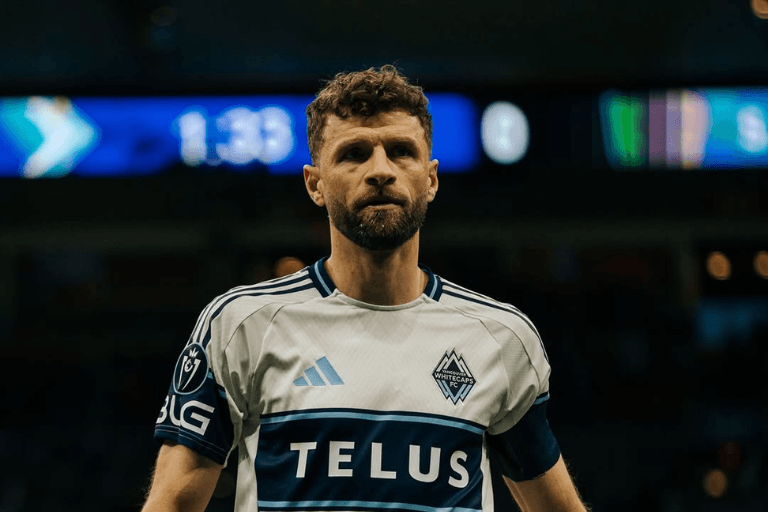
“The first half of the season revolves around the Champions Cup,” Thomas Müller said a few days ago.
However, his head coach Jesper Sørensen may see things slightly differently. His starting lineup for the first leg of the Champions Cup Round of 16 already hinted at that.
Compared to Vancouver’s convincing 4–1 MLS win at the Portland Timbers, Sørensen made several changes to the lineup. Those adjustments ultimately showed both in the performance and on the scoreboard, as the Canadian side suffered a clear 0–3 defeat.
A Disjointed Press
“It was my decision to make several changes to the lineup. Of course that affects the rhythm somewhat,” Sørensen admitted after the loss.
Müller not only started the match but also stayed on the field for the full 90 minutes. Still, from the opening whistle it was noticeable that the lineup — without Brian White, AZ Jackson, Andrés Cubas, and Ralph Priso — lacked cohesion.
Vancouver’s normally sharp pressing looked unusually porous. Large gaps repeatedly opened behind the first pressing line around Müller, and defensive assignments were occasionally unclear.
This allowed Seattle to escape pressure far too easily and quickly transition into attack. At the same time, the Whitecaps won very few high turnovers early on and were therefore unable to establish their usual dominance or control of the match.
Instead, the Sounders repeatedly created dangerous attacking situations. Around the midway point of the first half, a Seattle lead would not have been undeserved.
Possession Without Ideas
Sørensen’s team lined up in their usual 4-2-3-1, with inverted left back Tate Johnson’s positioning determining whether Vancouver built up in a 2-3 or 3-2 structure.
Seattle defended in a compact 4-4-2, successfully closing off the central spaces. As a result, Müller often drifted toward the wings just to get touches on the ball. Even the in-form playmaker Sebastian Berhalter rarely received the ball in dangerous areas.
Consequently, many Vancouver attacks ended on the flanks. Even when the Whitecaps managed to work their way into promising positions, the final pass or finish was often missing.
The 32nd minute offered a glimpse of what can happen when Müller receives the ball centrally in front of the penalty area. With quick awareness, he redirected a pass into space on the left flank — but Kenji Cabrera’s shot was ultimately harmless.
A Setback Before Halftime
Frustratingly for Vancouver, just as they began to stabilize midway through the first half — with improved counter-pressing and increasing territorial control — they conceded shortly before the break.
A poorly weighted back pass from center back Mathías Laborda, not the first of its kind this season, was ruthlessly punished by Seattle.
Despite holding just 41 percent possession, the visitors’ lead was not entirely undeserved given the higher quality of their chances, with both teams recording seven shots by halftime.
Pressing Errors Lead to Goals
In the second half, it was clear that captain Müller tried to take responsibility.
He drifted even more frequently to the wings and occasionally dropped deeper into central areas to get involved. Still, Vancouver struggled to create clear scoring chances.
Seattle, on the other hand, struck again in the 58th minute.
Once more, the goal originated from poorly coordinated pressing. Four Whitecaps players converged on a single opponent, who still managed to escape the pressure. That left large spaces open on the right flank and exposed Vancouver’s high defensive line — allowing Seattle to score with a bit of fortune.
Substitutions Bring Little Change
After halftime, Ralph Priso had already replaced Tristan Blackmon. Later, Sørensen attempted to inject fresh energy by bringing on winger Cheick Sabaly and striker Brian White.
The partnership between Müller and Rayan Elloumi — who had led the line with commitment — seemed to lack chemistry both in and out of possession.
The double substitution, however, failed to spark a turnaround.
Vancouver’s best chance to pull one back came from a corner, while Müller himself attempted a header following a cross. But the decisive ideas against Seattle’s deep defensive block were still missing.
Another Defensive Breakdown
Immediately after that double chance from the corner kick came the next blow.
Once again, a lack of coordination in Vancouver’s pressing left space completely open behind left back Johnson. Similar to the second goal, this led — again with a touch of luck — to Seattle’s third.
Müller Hits the Crossbar
From that point on, the Whitecaps dominated the final third but rarely looked truly dangerous.
With the penultimate action of the match, Müller nearly grabbed an important consolation goal. The ball fell kindly to the 36-year-old inside the box, but his difficult attempt crashed against the crossbar.
A Mountain to Climb
The Vancouver Whitecaps now face a daunting task in the second leg next week in Seattle.
With the Champions Cup’s away-goals rule in effect, Vancouver must overturn a three-goal deficit. After this first leg, the dream of lifting the first trophy of the season already seems distant — even if the 0–3 result slightly exaggerates the gap given the 17–10 shot advantage for the home side.
Müller vs. James Rodríguez Next
Before that, however, MLS action continues on Sunday.
At BC Place, the Whitecaps will host Minnesota United — and Müller could face a familiar name from European football. James Rodríguez, who recently joined Minnesota, may make his debut in the matchup against Vancouver.
The latest texts:
What Thomas Müller’s Vancouver Whitecaps Still Need to Improve
Berhalter’s Magic Foot Delights Thomas Müller